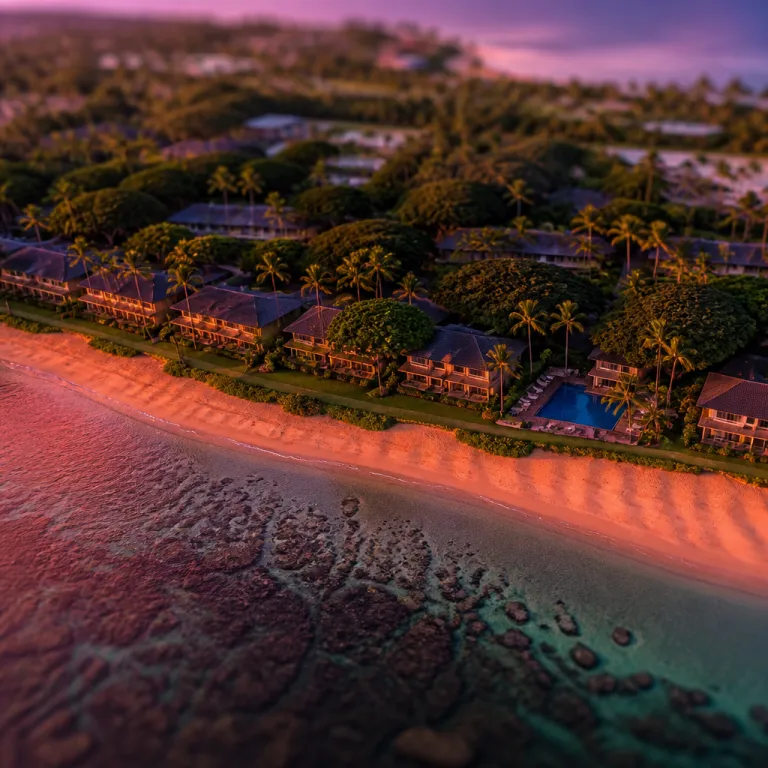
From generic clicks to qualified intent at maui banyan resort
Maui Banyan Resort in Kihei Maui offers a precise laboratory for understanding how meta-search intent really behaves for a beach condominium property in Hawaii. When travelers search for a Kihei Maui stay with bedroom suites, a private balcony, and easy access to the shoreline, their expectations around price, amenities, and location are already highly structured. For e-commerce leaders and revenue managers, the way this property appears across meta-search platforms determines whether those expectations are confirmed or broken.
The resort is located Kihei on South Kihei Road, a short easy walk of roughly 0.1 miles to Kamaole Beach and the golden sands that define this part of Maui (distance estimate based on Google Maps walking directions). That walking distance to Kamaole Beach and the wider beach Maui strip is not just a physical metric; it is a core intent signal that should be encoded in every meta-search feed, from the property description to the map width and zoom level. When a user filters for walking distance to the beach, the algorithm must translate that 0.1 miles into a clear promise of an easy walk with minimal street crossings and direct access to the sands Kamaole shoreline.
Meta-search engines that treat Maui Banyan as a generic condo property in Hawaii miss the nuance of its beach adjacency, its mix of bedroom suites and larger suites, and its no resort fees positioning. The property offers amenities such as swimming pools, tennis courts, free parking, and complimentary Wi-Fi, and these amenities should be structured as discrete attributes rather than a single unstructured text fill in the feed. When intent is “family friendly beach Maui condo with golf nearby and shopping dining options,” the engine must surface Maui Banyan ahead of less relevant Kihei properties that lack similar amenities or that sit far from Kamaole Beach.
Encoding user intent around beach, views, and suites in structured data
At maui banyan resort, user intent clusters around three dominant themes: proximity to the beach, the quality of the view, and the configuration of bedroom suites. A traveler comparing beachfront options in Kihei Maui is not only weighing price per night but also the trade off between a direct ocean view and an easy walk to Kamaole Beach with more space in the suites. Meta-search partners and OTA teams must translate these nuanced trade offs into structured attributes that can be ranked and filtered, similar to how advanced beachfront comparison frameworks are applied in a specialized beachfront hotel comparison strategy.
The property’s layout means some units face the inner courtyards with swimming pools and tennis areas, while others offer a partial ocean view toward West Maui and the wider Hawaii coastline. That difference in view type should be encoded with precise labels, because users who search for “Kihei Maui beach view condo with private balcony” are expressing a higher willingness to pay than those who simply want an easy walk to the sands Kamaole shoreline. When bedroom suites are tagged only as “standard suites” in the feed, meta-search engines cannot align them with intent signals such as “two bedroom suites for families” or “one bedroom suites with separate living area and private balcony.”
E-commerce teams should work with technology editors to ensure that every unit type at Maui Banyan, from compact suites to larger bedroom suites, is mapped to clear occupancy, bed configuration, and amenity sets. Attributes like golf nearby, access to championship golf courses, and proximity to local tennis club facilities should be structured as binary or distance based fields, not buried in unstructured descriptions. In practice, this means using explicit fields such as distance_to_beach_miles, view_type, has_private_balcony, has_swimming_pool, has_tennis_courts, and golf_course_distance_miles so meta-search engines can surface Maui Banyan to users whose intent includes both beach relaxation and golf or tennis activity, while still respecting price sensitivity and stay length.
Price discovery strategy from kahului airport search to street level reality
For many guests, the meta-search journey for maui banyan resort begins long before they see a photo of Kamaole Beach or the golden sands in front of Kihei. The first query often references Kahului Airport or simply “airport to Kihei Maui condo,” which means that distance from the airport and transfer time become early price discovery anchors. When meta-search platforms show Maui Banyan as located Kihei roughly 25 kilometres from Kahului Airport, they must also contextualize that distance with estimated transfer cost and time to avoid sticker shock later in the funnel (distance and drive time based on typical routing from Kahului Airport to South Kihei Road).
Price discovery is not only about nightly rates; it is about the total perceived cost of the stay, including airport transfers, parking, and access to amenities such as swimming pools, tennis courts, and nearby golf. A user comparing Maui Banyan with a West Maui resort that sits farther from the airport but closer to championship golf courses will weigh transfer time against golf nearby access and dining entertainment options. This is where advanced intent modelling, similar to the frameworks used in meta-search intent reshaping case studies, becomes critical for both OTA partners and meta-search platforms.
On the ground, the property sits on South Kihei Road, a street that offers shopping dining venues, casual beach Maui cafés, and local entertainment championship events at nearby clubs. Meta-search feeds should reflect that guests can reach these shopping dining and dining entertainment options within walking distance, often in just a few minutes. When the feed fails to encode this street level reality and the location easy access to services, users may misinterpret Maui Banyan as an isolated property, which depresses click through rates and weakens the perceived value of its amenities relative to price.
Aligning meta-search bidding with micro intent at maui banyan
Revenue managers working with maui banyan resort need to move beyond generic brand or destination bidding and instead align campaigns with micro intent segments. One segment searches for “Kihei Maui condo near Kamaole Beach with swimming pool,” another for “family friendly bedroom suites with private balcony and tennis access,” and a third for “golf nearby with easy walk to beach Maui restaurants.” Each of these segments carries different price elasticity and different expectations around amenities and entertainment championship style experiences.
On meta-search platforms, this means structuring campaigns so that Maui Banyan appears prominently when filters for beach distance, suites size, and amenities like tennis or golf are applied. Bids should be higher for queries that include both Kamaole Beach and Maui Banyan or Banyan Maui, because these users already show strong brand and location intent. For more generic searches such as “Hawaii condo with golden sands beach access,” the property can still compete, but with more conservative bids and creative that emphasises the easy walk to the sands Kamaole shoreline and the width of on site amenities.
To operationalise this, revenue teams can define bid bands by intent strength. For example, branded searches that include “Maui Banyan Resort” or “Banyan Maui” might receive the highest bid level, mid-range bids can target Kihei Maui or Kamaole Beach queries that mention bedroom suites or private balcony, and lower bids can be reserved for broad Hawaii beach condo searches. E-commerce leaders should also coordinate with OTA partners to avoid internal cannibalisation on high intent queries that include the exact property name maui banyan resort. When both direct reservations channels and OTA listings bid aggressively on the same micro intent, acquisition costs rise without necessarily increasing total reservations volume. A more efficient strategy is to let the direct channel dominate branded intent while OTA partners focus on broader Kihei Maui or Hawaii beach condo searches, using creative that highlights the property’s location easy access, free parking, and no resort fees.
Designing on site experiences that reinforce meta-search promises
User intent captured in meta-search for maui banyan resort must be honoured on site, or trust erodes quickly. When a guest books based on a promise of an easy walk to Kamaole Beach, a private balcony with partial ocean view, and access to swimming pools and tennis courts, every touchpoint at the property should reinforce those expectations. This alignment between digital promise and physical experience is central to long term brand equity and repeat reservations.
The resort’s configuration of suites and bedroom suites allows for flexible occupancy, from couples to multi generational families, and this flexibility should be reflected in both pre arrival communication and on site signage. Clear wayfinding from each building to the beach Maui access points, the tennis club style courts, and the swimming pool areas helps guests experience the width of amenities without friction. When guests can move easily from their private balcony to the golden sands in front of Kamaole Beach, then on to nearby shopping dining and dining entertainment venues, the perceived value of the stay rises beyond the nightly rate.
Operationally, the property’s no resort fees policy, free parking, and complimentary Wi-Fi answer common pain points that often surface in meta-search reviews. The official guidance that “Book early during peak seasons,” “Rent a car for island exploration,” and “Check weather forecasts” should be integrated into pre stay emails and on site information, because these tips align with the real world context of Maui and Hawaii travel. By ensuring that the on site experience at Maui Banyan matches the expectations set in meta-search engines, the resort strengthens its review profile, which in turn feeds back into higher visibility and better click through performance.
Data collaboration between owners, managers, and meta-search platforms
Maui Banyan Resort operates as a condominium style property with around 250 units managed by a mix of partners, including Aqua Aston, Castle Management, and individual owners (management structure and approximate unit count based on publicly available property descriptions and management company listings; figures may vary by season and contract). This fragmented ownership model creates data challenges for meta-search platforms, OTA partners, and revenue managers trying to maintain consistent pricing, availability, and amenity information. Without strong collaboration, the same suites or bedroom suites can appear with conflicting descriptions, inconsistent view labels, or mismatched amenities lists across channels.
To address this, digital directors and technology editors should establish a centralised data hub that standardises unit types, amenities, and policies for all Maui Banyan listings. This hub should define canonical attributes such as distance to Kamaole Beach, presence of private balcony, access to swimming pools and tennis courts, and proximity to golf nearby or championship golf courses. When this structured data is shared via API with meta-search partners, it reduces the need for manual fill of descriptions and ensures that every listing reflects the same reality of the property’s location easy access and width of amenities.
Marketing teams can then layer performance data from meta-search campaigns, direct reservations, and OTA channels to refine bidding and content strategies. For example, if units with a clear mention of golden sands and beach Maui access show higher conversion from users searching from Kahului Airport, campaigns can be adjusted to emphasise that narrative. Revenue leaders can also apply advanced paid search tactics, such as those outlined in specialised revenue playbooks for last minute hotel campaigns, to peak periods when demand for Kihei Maui and West Maui accommodations surges.
Strategic recommendations for meta-search partners working with maui banyan resort
Meta-search platforms and OTA partners that want to maximise performance with maui banyan resort should start by segmenting user intent into clear cohorts. One cohort prioritises beach Maui access and an easy walk to Kamaole Beach, another values suites with private balcony and strong view potential, and a third seeks a balance of amenities such as swimming pools, tennis courts, and golf nearby. Each cohort responds differently to price anchors, creative messaging, and the prominence of specific amenities in the listing.
For the beach focused cohort, listings should highlight the 0.1 mile walking distance to Kamaole Beach, the golden sands in front of the property, and the walking distance to shopping dining and dining entertainment venues along South Kihei Road. For the amenities driven cohort, creative should emphasise the width of on site facilities, from swimming pools and tennis club style courts to access to nearby championship golf courses and entertainment championship events. For the space seeking cohort, the focus should be on bedroom suites and larger suites that can comfortably accommodate families, with clear mention of private balcony options and the ability to enjoy a partial ocean view toward West Maui.
Across all cohorts, partners must ensure that pricing is transparent, with no hidden resort fees and clear information about parking, Wi-Fi, and any optional services. The official FAQ clarifies that “Is parking available? Yes, free parking is provided,” “Are pets allowed? No, pets are not permitted,” and “Is Wi-Fi available? Yes, complimentary Wi-Fi is offered,” and these statements should be reflected consistently across all meta-search and OTA listings. By aligning structured data, creative messaging, and bidding strategies with real user intent, meta-search partners can turn Maui Banyan into a benchmark case for effective price discovery and high quality guest acquisition in Hawaii.
Key figures for meta-search and price discovery at maui banyan resort
- Maui Banyan Resort offers approximately 250 condominium style units, which creates a large inventory base for meta-search platforms to index and segment by view type, bedroom suites configuration, and amenities (approximate figure compiled from Maui Banyan Resort marketing materials and major OTA listings; always verify against current property data).
- The property sits about 0.1 miles, or roughly 160 metres, from Kamaole Beach, placing it firmly within typical user filters for walking distance to the beach on most engines (distance based on Google Maps estimates for the route from the property to Kamaole Beach).
- The average nightly rate of around 200 USD positions Maui Banyan in the mid range segment for Kihei Maui, allowing revenue managers to compete effectively against both budget condos and higher priced West Maui resorts (illustrative rate range derived from publicly visible pricing on major booking platforms; actual rates vary by season, unit type, and availability).
- The resort operates year round with no resort fees, which simplifies price comparison on meta-search engines and reduces the risk of user frustration during the final booking steps (policy based on Maui Banyan Resort operational information as presented in public-facing materials; guests should confirm current fees at the time of reservations).
FAQ about maui banyan resort and meta-search strategy
How close is maui banyan resort to Kamaole Beach for guests booking via meta-search ?
The resort is located approximately 0.1 miles from Kamaole Beach, which means guests can reach the golden sands in just a few minutes on foot. Meta-search listings should clearly state this walking distance to align with user filters for beach proximity. When this metric is visible, click through and conversion rates typically improve for beach focused searches.
What amenities at maui banyan resort matter most for user intent on comparateurs ?
The most influential amenities for intent are swimming pools, tennis courts, free parking, complimentary Wi-Fi, and the availability of suites and bedroom suites with private balcony options. Proximity to golf nearby and access to championship golf courses also plays a role for certain segments. These amenities should be encoded as structured attributes in every meta-search feed so that users searching for Kihei Maui or Hawaii beach condos can filter quickly to the property that best matches their needs.
How should revenue managers handle pricing for maui banyan resort across OTA and direct channels ?
Revenue managers should maintain rate parity while differentiating value through flexible policies and added benefits on the direct channel. Branded intent queries that include maui banyan resort or Maui Banyan should be prioritised for direct reservations, while OTA partners focus on broader Kihei Maui and Hawaii searches. Transparent pricing with no resort fees and clear information about parking and Wi-Fi is essential across all channels.
What is the best way to communicate airport access from Kahului Airport to maui banyan resort ?
Meta-search and OTA listings should state that Maui Banyan is located Kihei roughly 25 kilometres from Kahului Airport, with typical transfer times of 25 to 40 minutes depending on traffic (based on standard driving routes between the airport and South Kihei Road). Providing estimated taxi or shuttle costs helps users complete their price discovery process. This transparency reduces friction at the final booking step and supports higher conversion.
Are pets allowed at maui banyan resort, and how should this appear in meta-search filters ?
Pets are not permitted at Maui Banyan, and this policy should be clearly indicated in the property rules section of every meta-search and OTA listing. When users apply pet friendly filters, the resort should be excluded automatically to avoid mismatched expectations. Clear policy communication supports better guest satisfaction and more accurate intent matching.