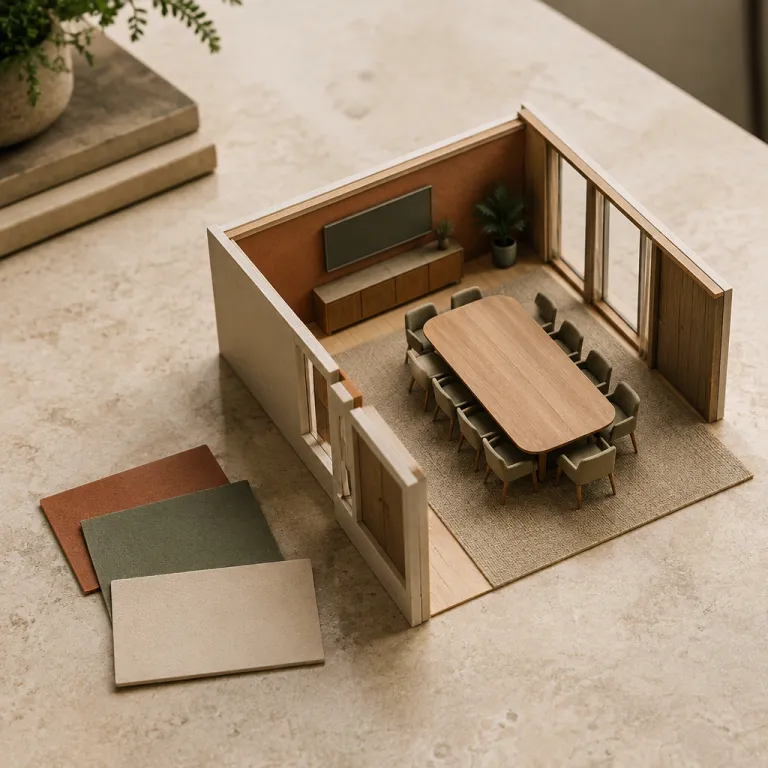
From raw capacity data to intent signals in meta-search funnels
For hospitality decision makers, Frya Leir’s meeting capacity is more than a static figure on a venue page. It becomes a structured data asset that shapes how a group planner searches, filters, and evaluates options across meta-search and price comparison platforms. When the number of rooms, the area of each hall, and the maximum group size are clearly listed and kept up to date, user intent is easier to interpret, segment, and activate.
Frya Leir is located in Ringebu in the Innlandet region of Norway, and its meeting inventory illustrates how capacity data can be operationalized for digital discovery. The venue offers four meeting and conference rooms, a festhall of 750 square metres, and a dining hall that seats 90 persons, which together provide a clean framework for intent-based bidding and merchandising. When this meeting space is encoded as structured attributes, meta-search engines and comparateurs de prix can align bids and placements with the exact group size, day pattern, and event profile expressed in the query.
On the demand side, planners rarely type “Frya Leir meeting rooms capacity” into Google, yet their behaviour still reveals capacity expectations. They filter by group size, by event type, by preferred day pattern, and by the need to host plenary sessions and breakouts in the same area. Each interaction in this process acts as a high-quality intent signal, which revenue managers and digital directors can translate into differentiated pricing, minimum length-of-stay rules, and meeting package configurations that reflect both core and side revenue opportunities.
Encoding frya leir meeting rooms capacity for user intent and pricing logic
Translating Frya Leir’s meeting and event capacity into machine-readable attributes is the first step toward an intent-led meta-search strategy. The four meeting rooms, the 750 square metre festhall, and the 90 person dining hall should be covered in a structured taxonomy that includes room area, seating style, and maximum group size for each configuration. When this information is well normalized and clearly listed, meta-search partners and OTA interfaces can surface the right space to the right group profile without friction.
For Responsables e-commerce and directeurs digitaux, the key is to align capacity attributes with the way planners think about their event life cycle. A corporate group might start with a simple search for a venue located in Norway, then refine by the ability to host a plenary of 300 delegates, several smaller breakout rooms, and a banquet on the same day. If Frya Leir’s inventory is correctly listed in the feed, the platform can act as an intelligent filter, steering that group toward the festhall for the main session and the other rooms for workshops, while the dining hall handles meals and informal networking.
To move from theory to practice, capacity data should be mapped into a concrete feed schema. A simplified JSON-style structure might include fields such as space_id, name, area_m2, max_capacity_theatre, max_capacity_banquet, day_pattern, and available_dates, with each space at Frya Leir covered by a separate object. Meta-search platforms that integrate these attributes into their ranking logic can also support more transparent price discovery for meetings and events by combining capacity, group size, and event duration in a single decision layer.
Capacity as a behavioural filter : how planners express needs on meta-search
When planners evaluate how well Frya Leir can host their event, they rarely start from the venue name; they start from constraints. They know the number of delegates, the preferred day pattern, the need to host plenary and breakout sessions, and the desired balance between work and local culture experiences. Each constraint becomes a behavioural filter that meta-search engines can interpret as a proxy for capacity requirements and for the type of event they are trying to host.
On a typical meta-search journey, a planner might first specify a destination located in Innlandet, then refine by property type, then by the ability to accommodate a group of 80 for meetings and a banquet. If the system has granular data on Frya Leir’s meeting space, it can match that intent to the 90 seat dining hall for meals and to the festhall or other rooms for sessions, while clearly signalling which configurations are covered and which would require compromises. This is where intent-led ranking and merchandising outperform generic listings that only show room counts and a single capacity figure without context.
For revenue managers, the challenge is to translate these behavioural signals into dynamic pricing and availability rules. Consider a concrete flow: a planner searches Google for “Innlandet conference venue for 120 people, 2 days,” then selects dates that fall in a cold shoulder period. The meta-search partner reads the group size, day pattern, and required area per person, identifies that the festhall can host the plenary and that the dining hall can seat the full group, and returns a package price that combines meeting room hire, catering, and accommodation. When a high-value group searches for a specific day and indicates a need for a large area, the system can prioritize offers that bundle meeting space, catering, and accommodation, while acting conservatively on discounts to protect yield.
From static capacity to dynamic packaging : monetizing every square metre
Frya Leir’s meeting capacity offers a clear canvas for dynamic packaging strategies that go beyond simple room hire. The festhall of 750 square metres can host a large plenary group, an exhibition, or a banquet, while the four meeting rooms support smaller sessions and board meetings. When these spaces are treated as modular assets rather than fixed products, digital teams can build packages that respond to user intent in real time and adapt to different phases of the event life cycle.
On the supply side, each square metre of area can be priced differently depending on the event profile, the day of the week, and the lead time. A high-demand period with multiple group requests might justify premium pricing for the festhall, while a cold shoulder period could be used to promote hybrid packages that include meeting space, local culture experiences, and extended stays. The dining hall, with its 90 person capacity, can be positioned as both a breakfast venue for residential groups and a banquet space for external events, which increases the lifetime value of each square metre and supports more resilient revenue streams.
Digital directors and OTA partners should also consider how side services interact with Frya Leir’s layout in the eyes of the planner. A venue that can host a full group in one covered area for meals, provide breakout rooms close to the main hall, and maintain high service standards will convert better than a fragmented layout. Even seemingly minor details, such as the ability to serve hot and cold dishes efficiently or to accommodate dietary preferences like vegan options instead of traditional eggs-based breakfasts, can influence perceived value and justify higher rates when communicated well.
Data quality, structured feeds, and the role of platforms in capacity visibility
For meta-search platforms and comparateurs de prix, the reliability of Frya Leir’s capacity data is as critical as price accuracy. If the number of rooms, the maximum group size, or the available area is misrepresented, planners will experience friction, and conversion rates will fall. This is why structured feeds must be carefully maintained, with capacity attributes clearly listed, regularly audited, and covered by internal quality checks.
Venue operators like Frya Leir, acting as both hosts and data providers, need internal processes that keep digital partners aligned with on-the-ground reality. When a room is reconfigured, when a partition wall changes the usable area, or when a new layout allows a higher capacity, these changes should flow through the entire ecosystem, from the property management system to the meta-search API. A well-governed data pipeline ensures that Google Hotel Ads, OTA platforms, and specialized MICE meta-search tools all present consistent information about meeting and banquet spaces and avoid outdated figures.
For revenue managers, this data discipline is not just operational; it is strategic. Accurate capacity figures allow them to model demand scenarios, forecast which group sizes will be most profitable on a given day, and decide when to prioritize meetings over transient business. Over time, the life of each meeting space becomes a series of data points that can be analysed to refine pricing, improve allocation between competing requests, and identify which side segments, such as local training events or association meetings, are underexploited and could be better covered.
User centric storytelling : how capacity information shapes perception and trust
Beyond numbers, the way Frya Leir’s meeting capacity is presented in meta-search results influences how planners perceive the venue. Clear descriptions that explain how a group of 50, 100, or 300 can be hosted across the festhall, the four meeting rooms, and the dining hall help planners visualise their event. When capacity information is covered with floor plans, photos, and layout examples, it reduces uncertainty and strengthens trust in both the venue and the platform acting as intermediary.
Hospitality brands that communicate capacity as part of a broader narrative about service, local culture, and guest experience tend to perform well in high-consideration segments. Frya Leir, located in the Norwegian countryside, can position its large area and flexible rooms as a setting for strategy retreats, incentive programmes, or training sessions that balance focused work with outdoor activities. When planners see that the venue can host a plenary in the festhall, serve a seated dinner for 90 in the dining hall, and still provide smaller rooms for confidential meetings on the same day, they are more likely to shortlist it and to see the offer as high value.
Meta-search platforms can support this storytelling by allowing richer content around capacity, not just a single figure in a table. A quote such as “The festhall is 750 m² for large gatherings” and “Dining hall seats 90 persons” and “There are four conference/meeting rooms onsite” provides concrete anchors that complement the numerical data. When this information is surfaced alongside transparent pricing models, as explored in analyses of meta-search price transparency for hospitality, planners feel that the venue and the platform are acting in their best interest, which ultimately improves conversion and long-term loyalty.
Key statistics on frya leir meeting rooms capacity and digital discovery
- Frya Leir offers four dedicated meeting and conference rooms, which allows digital teams to target both small board meetings and medium-sized training groups with differentiated pricing and packaging strategies that reflect the commercial life of each space.
- The main festhall provides approximately 750 square metres of usable area, enabling configurations for large gatherings such as conferences, exhibitions, or banquets, and giving revenue managers a high-impact asset for peak demand periods.
- The dining hall can seat around 90 persons in a single sitting, which is particularly relevant for group planners who need to host all delegates in one covered space for meals without splitting the group across multiple rooms.
- The combination of four meeting rooms, a large festhall, and a 90 seat dining hall means that Frya Leir can host multiple events on the same day, provided that allocation and scheduling are carefully managed in both operational systems and digital distribution feeds.
FAQ : frya leir meeting rooms capacity and meta-search strategy
How many meeting and conference rooms does Frya Leir offer ?
Frya Leir offers four dedicated meeting and conference rooms, which can be used for board meetings, workshops, or breakout sessions alongside larger events hosted in the festhall or dining hall. This mix of spaces allows planners to design multi-track programmes without leaving the venue and to keep the group together throughout the day.
What is the maximum capacity of the main banquet or festhall space ?
The main festhall at Frya Leir has a surface of about 750 square metres, which supports large gatherings such as conferences, exhibitions, or banquets. The exact number of delegates depends on the chosen layout, including theatre, classroom, or banquet-style seating, and on how much area is reserved for staging or side activities.
How many people can be seated in the dining hall at Frya Leir ?
The dining hall at Frya Leir can seat approximately 90 persons in a single sitting, making it suitable for group meals, gala dinners, or social events linked to a conference. This capacity is particularly valuable for planners who want the entire group to dine together in one room and to keep the event flow covered within a single building.
How should capacity data be integrated into meta-search and OTA feeds ?
Capacity data for Frya Leir, including the number of meeting rooms, the area of the festhall, and the dining hall capacity, should be integrated as structured attributes in meta-search and OTA feeds. A practical process is to ensure that each space is represented with consistent identifiers, clear figures for maximum capacity by layout, and availability by day, so that platforms can match user intent, such as group size and event type, with the appropriate spaces and present accurate availability and pricing throughout the booking journey.
Why does accurate capacity information matter for revenue management ?
Accurate information on Frya Leir’s meeting capacity enables revenue managers to forecast demand by group size, prioritise high-value events, and optimise allocation between meetings and transient guests. It also reduces the risk of overcommitment, which protects both guest satisfaction and long-term profitability by ensuring that every square metre is acting in line with strategy.