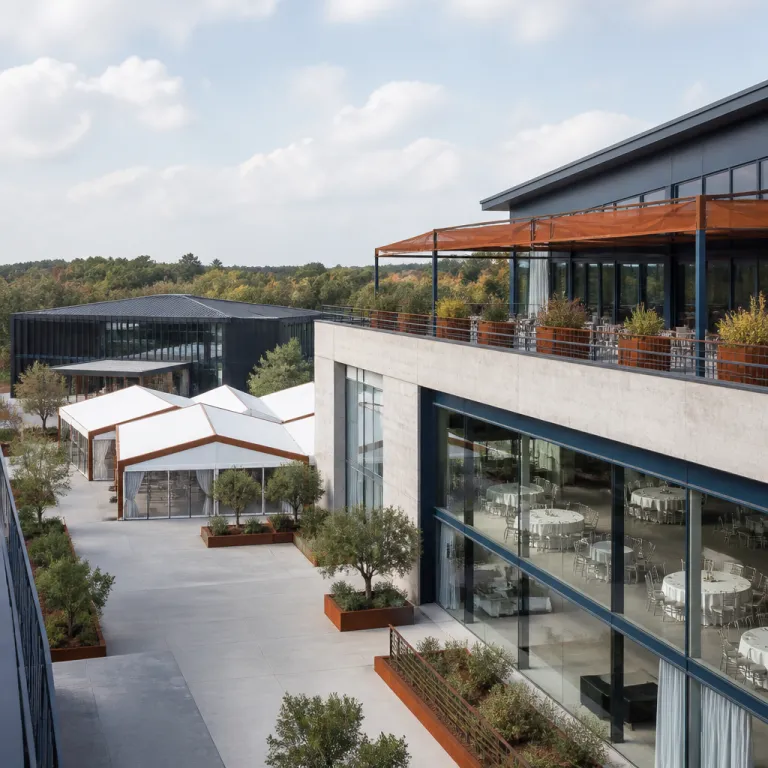
The new currency of visibility: counting event spaces in exclusive hotels and venues
Metasearch platforms increasingly treat the number and diversity of event spaces in exclusive hotels and venues as a core data point for ranking and discovery. When a luxury hotel or château-style property lists every meeting room, terrace, and banquet hall as a distinct event space, the platform can surface richer filters for each event planner and for every revenue manager. This granular inventory of meeting space also allows e-commerce leaders and digital directors to align bidding strategies with high-value meetings events rather than with generic transient demand.
Luxury groups such as Dorchester Collection, which publicly highlights dozens of distinct meeting venues across its portfolio, illustrate how detailed room-level data changes the metasearch game. Each meeting room, from a theater classroom configuration to an intimate boardroom, becomes a separate monetizable asset in the pricing and ranking algorithms used by OTA partners and metasearch engines. When the system understands how many event venues a single hotel offers, and how each room accommodates guests in different layouts, it can match more precisely the intent of users searching for a flexible event setting or for social events that require both a terrace and a large reception room.
For exclusive venues like Oheka Castle, the richness of events inventory matters as much as average daily rate. A historic mansion with multiple event spaces can appear in more long-tail searches for meeting venues, wedding reception locations, or hybrid meetings events that accommodate guests in both theater classroom and banquet-style layouts. In one internal case study shared by a European luxury group, exposing every meeting event room as a separate entity in metasearch led to a 22% uplift in qualified enquiries for receptions and corporate meetings within six months. The more accurately the hotel or venue describes each meeting event room, the easier it becomes for metasearch comparators to calculate the effective number of event spaces in exclusive hotels and venues within a destination and to benchmark pricing power and positioning.
From static listings to structured event inventory in metasearch
Traditional hotel listings on metasearch platforms focused on bedrooms, rates, and location, leaving event space as a vague bullet point. That approach no longer satisfies corporate planners who need to read precise capacity data, understand whether a room accommodates guests in banquet, classroom, or theater classroom formats, and compare meeting venues across competing properties. For e-commerce teams, the shift toward structured event inventory means that every meeting room, terrace, and reception hall must be modeled as a separate entity in the hotel’s connectivity stack.
Large convention brands such as Gaylord Hotels, which promote tens of thousands of square metres of meeting space across their properties, show how scale interacts with structure in metasearch. When that volume of event space is broken down into individual event venues, each with its own capacity, virtual tour assets, and pricing rules, comparators can rank hotels not only by price but also by the number and type of event spaces in exclusive hotels and venues that match a specific brief. In one North American pilot, a convention-focused brand reported that once it exposed room-level meeting space data and virtual tour links through its CRS, metasearch-driven RFP volume for large events increased by more than 15% year-on-year. This structured approach allows revenue managers to start dynamic pricing for meetings events, adjusting rates by room type, date, and even by preferred setting such as terrace, ballroom, or classroom.
To unlock this value, digital directors must work closely with technology providers and CRS partners to expose event inventory through robust API connections. A well-designed schema distinguishes between an event space used for social events, a meeting space optimized for hybrid meetings, and a banquet room that primarily accommodates guests for gala dinners. Turning a property improvement plan into a metasearch advantage for hotels requires that every renovation of meeting venues or event spaces is reflected quickly in the structured data that metasearch platforms ingest, rather than buried in marketing copy that busy planners may skip content or skim without reading in depth.
Pricing transparency and the metasearch discovery of premium event venues
As metasearch comparators evolve, they no longer surface only overnight rates but also indicative pricing for meetings events and social events. When a hotel or venue publishes clear starting prices for each event space, planners can filter by budget, capacity, and preferred setting without needing to skip navigation or scroll through irrelevant content skip sections. This transparency helps OTAs and metasearch platforms reduce enquiry friction and increase conversion for high-value meetings and receptions.
Market trends show rising demand for unique venues and for exclusive hotels that offer privacy, integrated event planning services, and modern audiovisual tools. Dorchester Collection and Oheka Castle both exemplify this shift, combining historic architecture with innovation such as integrated technology for virtual and hybrid meetings events. Industry case studies from leading conference organizers consistently highlight the same expectations: comprehensive event planning, catering, and audiovisual support; flexible meeting space that accommodates guests in multiple layouts; and the ability to start planning online with a virtual tour before committing to an on-site visit.
For revenue managers, the strategic question is how to position the number and quality of event spaces in exclusive hotels and venues within price comparison flows. Some will choose to highlight a single flagship event space with premium pricing, while others will emphasize a portfolio of flexible event rooms that can be reconfigured from theater classroom to classroom or banquet. In a 2023 internal benchmarking exercise by a global luxury chain, properties that displayed at least three distinct meeting event options with transparent starting prices saw a 12–18% increase in metasearch-assisted revenue from events compared with hotels that promoted only a generic “meeting space” line. Debates about how to display these options in distribution channels are already shaping hotel revenue strategies, and industry discussions about future distribution models underline how critical structured event data will become for both OTAs and metasearch partners.
User experience, accessibility, and how planners read event content on meta-search
Corporate planners and wedding clients rarely have time to read long descriptions when they compare event venues across multiple tabs. They scan for clear labels such as meeting space size, whether the room accommodates guests in different layouts, and whether a terrace or outdoor setting is available for social events. If the page structure is poor, many users will skip main sections, skip content blocks, or even skip footer navigation to reach the few lines that matter.
For e-commerce leaders and digital directors, this behaviour has direct implications for how the number of event spaces in exclusive hotels and venues is presented. Each event space should appear as a distinct card in the main content area, with concise data on capacity, preferred meeting event formats, and whether the room supports virtual or hybrid meetings. Clear headings, accessible navigation skip links, and logical content skip anchors help planners move quickly between meeting venues, event space options, and bedroom information without cognitive overload.
Metasearch platforms that respect accessibility best practices, including skip navigation and skip content features, tend to generate higher engagement among professional planners. In usability tests run by a European meetings marketplace in 2022, task completion time for sourcing a suitable meeting space dropped by nearly 30% when users could jump directly to the list of event spaces via a visible skip main link. When a user can jump directly to the list of event spaces, filter by meeting space size, and launch a virtual tour of a specific room, they are more likely to shortlist that hotel or venue. For exclusive properties, investing in high-quality virtual tour assets for each event space, terrace, and banquet room transforms static listings into immersive experiences that support both online planning and on-site tour scheduling.
From virtual tour to on site tour: bridging digital and physical planning journeys
The planning journey for meetings events now starts online, often within a metasearch environment that aggregates hotels and venues in a single interface. Planners expect to move from a quick virtual tour of a meeting space to a scheduled on-site tour without friction, and they want to compare how different event venues accommodate guests in similar formats. This expectation raises the bar for commercial teams, who must ensure that every event space is documented with accurate visuals, capacities, and layout options.
Exclusive hotels that manage multiple event spaces, such as the many rooms within Dorchester Collection properties, can use virtual experiences to highlight the diversity of their portfolio. One room might showcase a theater classroom configuration for corporate training, while another emphasizes a terrace setting ideal for social events or cocktail receptions. When these assets are integrated into metasearch comparators, planners can start shortlisting based on both the number of event spaces in exclusive hotels and venues and the qualitative feel of each room.
Technology partners and specialist software providers play a crucial role in synchronizing this content across channels. They must ensure that navigation skip tags, content skip anchors, and structured data for each meeting event room remain consistent between the hotel website, OTA listings, and metasearch feeds. When a planner clicks from a metasearch result into a hotel page, the main content should land them directly on the event spaces section, allowing them to read key details, review virtual tour links, and initiate planning conversations with the on-property team without unnecessary scrolling.
Revenue strategy: monetizing every meeting space in the metasearch ecosystem
Revenue managers increasingly treat each meeting space as a separate revenue stream, not just an ancillary to bedrooms. This mindset aligns perfectly with metasearch comparators that can expose the full number of event spaces in exclusive hotels and venues to planners searching by capacity, layout, or preferred setting. When a hotel lists every event space, from the smallest boardroom to the largest banquet hall, it can capture demand for both large conferences and intimate social events.
Data from large convention-focused brands such as Gaylord Hotels illustrates how scale can be leveraged when properly structured. A broad inventory of meeting space, once broken into individual event venues, allows for segmented pricing strategies that reflect different demand curves for theater classroom training sessions, gala dinners, or hybrid meetings events. Revenue managers can start by assigning baseline prices to each event space, then adjust based on seasonality, booking window, and whether the event accommodates guests staying on site or commuting from nearby locations.
Strategic partnerships with local tourism boards and destination marketing organizations further enhance this approach. When hotels co-create content with local businesses and tourism boards, they can position their meeting venues as integral parts of a wider destination experience, rather than as isolated rooms. For metasearch platforms, this richer narrative, combined with precise data on event spaces and meeting space capacities, supports more sophisticated ranking models that reward properties offering both strong pricing and compelling, human-centric experiences for guests and planners.
Key statistics on exclusive hotel event spaces and metasearch
- Dorchester Collection operates a global portfolio of luxury hotels with dozens of distinct event spaces, providing a dense concentration of premium meeting venues for metasearch platforms to index and compare.
- Gaylord Hotels promotes more than 40,000 square metres of meeting space across its properties, giving revenue managers a large inventory of event venues to segment by event type, capacity, and layout.
- Luxury hotels and exclusive venues in industry datasets position their event spaces for year-round booking, which allows metasearch comparators to promote meetings events and social events beyond traditional high-season patterns.
- Market observations from conference and wedding reports highlight three converging trends for event spaces in exclusive hotels and venues: increased demand for unique venues, deeper integration of technology in event planning, and a strong focus on personalized experiences for guests.
FAQ about metasearch, price comparison, and exclusive hotel event spaces
What services do luxury hotel event spaces typically offer for corporate planners?
Luxury hotel event spaces usually provide comprehensive event planning, in-house or partner catering, and full audiovisual support for meetings events. Many exclusive hotels also offer hybrid meeting capabilities, allowing guests to join both in person and virtually. These services are increasingly detailed in metasearch listings so planners can compare venues efficiently and start planning with confidence.
How can planners book an event space in an exclusive hotel through metasearch?
Planners often start by using metasearch comparators to filter hotels and venues by capacity, layout, and the number of event spaces in exclusive hotels and venues within a destination. Once they shortlist suitable properties, they typically contact the hotel’s event planning department directly to confirm availability, negotiate rates, and finalize the meeting event details. Some platforms also support direct enquiry forms that route leads into the hotel’s CRM for faster follow-up.
Are luxury hotel event spaces suitable for both corporate and social events?
Most luxury hotels design their event spaces to support a wide range of meetings events and social events, from board meetings to weddings. Flexible layouts allow a single room to switch between theater classroom, classroom, banquet, and reception formats, which helps in accommodating guests with different needs. Metasearch platforms increasingly highlight this flexibility so planners can match each event space to the right occasion.
How does the number of event spaces affect a hotel’s visibility on metasearch platforms?
Hotels and venues with multiple event spaces can appear in more filtered searches, especially when each meeting space is described with clear capacities, layouts, and visuals. Metasearch comparators can then match user intent more precisely, whether the planner needs a terrace for a cocktail reception or a large ballroom for a conference. This richer inventory often translates into higher visibility and better qualified leads for the hotel.
Why is technology integration important for exclusive hotel event venues in metasearch?
Technology integration allows hotels to publish real-time availability, pricing, and virtual tour assets for each event space across OTAs and metasearch platforms. This reduces friction for planners, who can read accurate information, view layouts, and start planning without waiting for manual proposals. It also supports revenue managers in applying dynamic pricing strategies to each meeting space based on demand, booking patterns, and the specific setting that best accommodates guests.