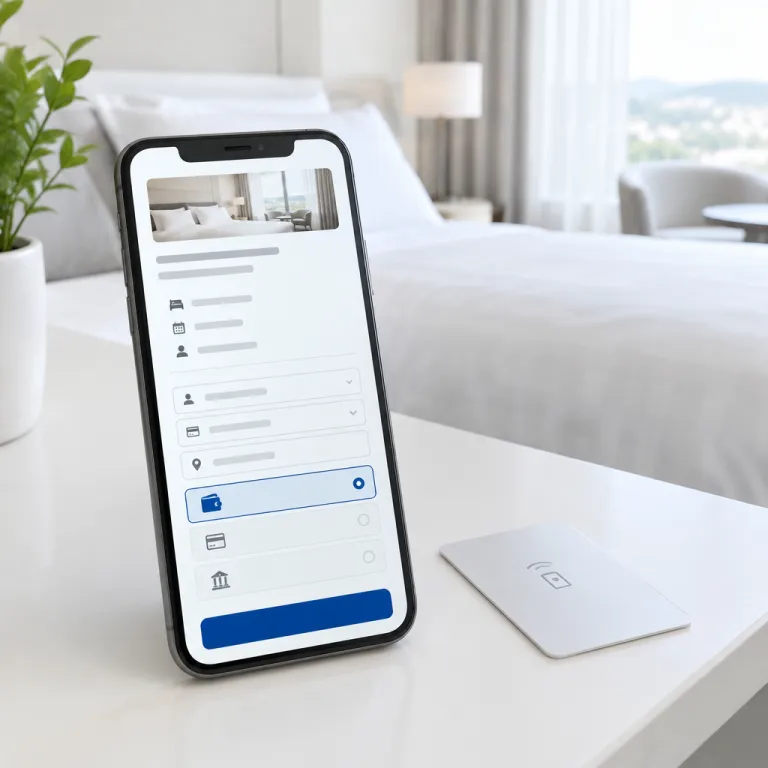
From metasearch click to mobile checkout: where the money leaks
Metasearch has already trained guests to compare every rate on a small screen. Yet most hotel booking flows still treat the mobile web as a shrunk desktop, especially at the final payment step. The real battleground for hotel mobile checkout and digital wallet conversion now sits between the last three taps and the confirmation page.
When a guest clicks from Google Hotel Ads or another comparison engine into your hotel website, they expect the booking engine to feel as fast and trusted as the OTAs they just compared. That expectation includes a mobile booking flow where digital wallets such as Apple Pay and Google Pay sit above the card fields, ready for one thumb, not buried below a long form. If your mobile hotel checkout ignores wallets and autofill, you are effectively pushing customers back to OTAs that already treat payment as a solved problem.
Across thousands of metasearch campaigns, the pattern is consistent and brutal. You can win the bid, show the best rate, and still lose the booking handoff because the mobile app or mobile web checkout feels slower or riskier than the OTA alternative. For revenue managers and directeurs digitaux, the question is no longer whether to pay Google for traffic, but whether your booking engine and payment methods can convert that traffic in real time before attention drifts back to the comparison grid.
Digital wallets as conversion infrastructure, not UX decoration
For hotel e-commerce leaders, digital wallets are no longer a design flourish. They are the core infrastructure that decides whether a mobile booking survives the payment step or dies in abandonment. Stripe network data, for example, has shown that checkout flows using wallets can cut time to pay by around 50 percent compared with traditional card entry flows, while also improving authorization rates in many markets.
On a metasearch click, the guest already trusts Google, so a visible Google Pay or Google Wallet button on the first checkout screen instantly borrows that trust. The same applies to Apple Pay on Safari, where a single thumbprint can replace typing sixteen card digits, an address, and a postcode on a cramped mobile web keyboard. When you combine digital wallets with browser autofill for cards and addresses, you move closer to the one-thumb checkout model that your younger guests already use for food delivery and ride hailing.
Hotel website designers and payment gateway providers need to treat wallet buttons as primary calls to action, not as secondary options hidden under “other payment methods”. Place Apple Pay, Google Pay, and any relevant local payment wallets above the traditional card fields, and ensure your booking engine passes the correct rate, currency, and tax details into the wallet in real time. At implementation level, that means mapping booking engine fields to the payment API (amount, currency, stay dates, taxes, and reference ID), validating that tokens return correctly to your system, and testing refunds and modifications. This is how hotel mobile checkout and digital wallet performance becomes a measurable lever for direct bookings rather than a vague UX upgrade.
Designing one-thumb checkout for real mobile conditions
Most hotel booking engines are still built around the assumption of two hands and a full keyboard. One-thumb checkout flips that assumption and forces every payment field, button, and trust signal into the natural thumb zone on a 6 inch screen. “What is one-thumb checkout? Payment flow optimized for thumb reach with wallet buttons and minimal typing”.
On a real mobile booking, the guest is often on a 4G connection, in a rideshare, or standing at a front desk comparing rates against OTAs on another device. That is why every extra field, every extra second of load time, and every redirect between the booking engine and the payment gateway quietly erodes mobile payment completion. Your UX équipe should test the full hotel booking flow on throttled networks, not office Wi-Fi, and measure how long it takes for guests to move from rate selection to confirmed payment using both cards and digital wallets.
Form design must follow three simple rules. First, remove fields before you restyle them, especially on the payment step where cards, addresses, and loyalty numbers often pile up. Second, use standard browser autocomplete attributes so app mobile and mobile web autofill can handle names, emails, and card numbers without friction. Third, keep a sticky summary of the rate, dates, and cancellation terms visible during checkout, and align that information with what was shown in metasearch so there is no last minute surprise that sends guests back to price comparison journeys such as those analysed in this deep dive on refundable deposits in metasearch flows. A simple internal checklist—“fields removed, autofill enabled, summary visible, wallets tested on real devices”—helps teams ship improvements quickly instead of debating layouts endlessly.
Instrumenting the funnel: where mobile sessions really die
Most revenue managers can quote their metasearch CPA, but far fewer can tell you the drop off rate between each mobile checkout step. That is a missed opportunity, because the biggest gains in hotel mobile checkout and wallet-driven conversion usually come from fixing one or two specific breaks, not from redesigning the entire booking engine. “How much does autofill improve mobile bookings? It can halve form-fill time and reduce abandonment significantly”.
Start by tagging every step of the mobile hotel funnel, from date selection to payment confirmation, and segment by traffic source so you can isolate metasearch clicks from OTAs referrals and direct bookings. Then look at three core breakpoints: the transition from room selection to guest details, from guest details to payment, and from payment to confirmation. If you see a sharp cliff at the payment step, that is your signal that cards, wallets, or local payment options are not aligned with customer expectations.
For hotel Tech & Innovation leaders, this is where collaboration with payment gateway providers and PMS vendors becomes critical. You need to know which digital wallets are actually enabled in your payment methods stack, how quickly the payment API responds in real time, and whether your PMS can accept prepayment tokens without forcing the front desk to rekey card details. In practice, that means defining analytics events for “wallet button viewed”, “wallet initiated”, “wallet authorised”, and “wallet failure reason”, then matching those to booking outcomes. When you can tie each booking engine step to a measurable abandonment rate and a specific fix, you move from vague UX debates to concrete ROI, the same way we argue for attribution discipline in metasearch and influencer spend in analyses such as this framework on measuring real ROI for hotel campaigns.
Trust, price integrity and the last three taps
Even the fastest mobile app checkout fails if guests do not trust the final screen. On a 6 inch display, you have only a few lines to reassure customers that the rate, taxes, and cancellation policy match what they saw on metasearch and OTAs. Any mismatch between the metasearch rate and the booking engine total will push them back to the comparison grid, where your competitors are one tap away.
Trust on mobile checkout is built from three elements: price clarity, security signals, and brand consistency. Price clarity means showing the full stay cost, including taxes and fees, before the guest hits pay, whether they use cards, digital wallets, or a local payment method. Security signals include visible card scheme logos, wallet badges such as Apple Pay and Google Pay, and clear references to PCI compliant processing, all rendered legibly on mobile web and app mobile layouts.
Brand consistency matters because guests often move between your mobile app, your hotel website, and metasearch results while finalising a hotel booking. If the logo, colours, or domain change abruptly at the payment step, even a technically perfect mobile checkout will feel risky. This is where aligning your loyalty messaging, email tone, and post booking communication with the same clarity you apply in high performing campaigns, such as those analysed in this piece on loyalty emails that actually get opened, can reinforce confidence and nudge guests to complete payment instead of abandoning to OTAs.
From ignored levers to standard playbook for hotel mobile checkout
Across global research, one pattern keeps repeating: wallets, autofill, and one-thumb checkout remain under used in hotel mobile UX, even as guests adopt them everywhere else. “Why do hotels ignore wallets? Complex systems, legacy booking engines, regulatory and regional payment gaps”. The hotels that break this pattern treat hotel mobile checkout and digital wallet optimisation as a revenue project, not as a cosmetic redesign.
For Responsables e-commerce and directeurs digitaux, the playbook is clear. First, audit your current booking engine to see whether Apple Pay, Google Pay, and other digital wallets are enabled, visible, and functioning on both mobile web and mobile app flows. Second, work with your payment gateway and PMS partners to ensure that wallet tokens, cards on file, and prepayments flow cleanly into your back office without forcing the front desk to handle sensitive card data or reconcile failed payments manually.
Third, run A/B tests on three specific levers: the order of payment methods, the presence of autofill and card scanning, and the density of fields on the payment screen. Measure not just overall bookings, but also the share of direct reservations captured from metasearch clicks where OTAs are bidding on the same dates and rate plans. A simple experiment design—50/50 split between “wallet-first layout” and “card-first layout”, tracked by device and country—can reveal double-digit uplifts in mobile conversion. When you can show that a wallet-first, one-thumb checkout reduces abandonment and lifts conversion enough to beat OTA commission levels, you finally align your metasearch spend, your booking hotel UX, and your payment infrastructure into a single, defensible distribution strategy.
FAQ
What is one-thumb checkout in a hotel mobile context ?
One-thumb checkout is a mobile payment design where guests can complete a hotel booking using only their thumb on a smartphone screen. It relies on prominent digital wallet buttons such as Apple Pay and Google Pay, minimal form fields, and strong autofill support for cards and addresses. The goal is to reduce typing, shorten the time to pay, and improve hotel mobile checkout digital wallet conversion on both mobile web and mobile app flows.
How do digital wallets affect direct bookings from metasearch ?
When a guest clicks from a metasearch engine into your hotel website, visible digital wallets such as Apple Pay, Google Pay, and Google Wallet increase trust and speed at the payment step. This reduces abandonment compared with traditional card only forms, especially on small screens and slow connections. As a result, more of those high intent sessions become direct bookings instead of leaking back to OTAs that already offer wallet based checkout.
Which payment methods should hotels prioritise on mobile checkout ?
Hotels should prioritise the payment methods that combine speed, trust, and local relevance for their main source markets. That usually means placing Apple Pay, Google Pay, and key local payment wallets above traditional card fields, while still supporting major cards for guests who prefer them. The exact mix should be reviewed regularly with payment gateway providers, based on real time data about which methods convert best on mobile booking flows.
How can hotels measure where mobile sessions drop in the booking funnel ?
Hotels can instrument each step of the booking engine with analytics events, from date selection to payment confirmation, and then segment by device and traffic source. By comparing the number of sessions that reach each step on mobile, e-commerce teams can identify where guests abandon, such as between guest details and payment or during card entry. Fixing the highest drop step first, often by enabling digital wallets and improving autofill, delivers the fastest gains in hotel mobile checkout digital wallet conversion.
Why do some hotels struggle to implement wallets and autofill ?
Many hotels rely on legacy booking engines and PMS integrations that were built before digital wallets and advanced autofill were standard. These systems can make it difficult to add Apple Pay, Google Pay, or local payment wallets without significant development work or new payment gateway contracts. Overcoming this requires coordinated planning between hotel website designers, payment providers, and internal IT teams to modernise the checkout stack step by step.